The shelf of heart health supplements is crowded, and the products rarely look alike on paper. Some are sold for circulation, some for cholesterol, and some as a general “men’s daily” capsule that bundles several goals into one label. Comparing them fairly means comparing what each one actually shows: the outcome studied, the ingredient and dose, the label transparency, and the terms of the purchase. This hub gathers our coverage of those three areas and points to the individual reviews where we read a label line by line.
This page is a comparison and navigation hub, not a diagnosis tool and not a ranking of brands. A blood test, not a supplement label, is how cholesterol and many circulation-related measurements are assessed. Where a product makes a strong claim, the useful question is whether published research on the ingredient matches the claim on the bottle — and whether the label even tells you enough to check.

How we compare heart health supplements
Our comparison method stays consistent across every product and every article linked from this hub. We read the label as published, we match claims to the research actually available, and we record purchase terms separately from health claims. We do not run trials, and we do not read a testimonial or a reseller page as independent evidence.
Three steps drive every comparison:
- Identify the exact outcome. “Circulation,” “cholesterol,” and “men’s daily health” point to different measurements. A change in one blood marker does not establish a change in another, and a change in a marker does not by itself establish a change in clinical risk.
- Match the claim to the study. Note the ingredient form, dose, duration, and the participants in the research. A product can contain an ingredient that has been studied while still lacking product-specific evidence.
- Record the label and the terms. A complete Supplement Facts panel, the seller identity, current price, shipping, refund window, and any recurring-billing language are all part of a transparent comparison.
The table below lists the factors we weigh, why each one matters, and what to verify on the label before buying.
| Factor | Why it matters | What to check on the label |
|---|---|---|
| Exact outcome studied | “Supports circulation” can mean blood pressure, endothelial function, or a symptom score — not the same thing | The specific claim and the measurement behind it |
| Ingredient and form | Botanicals and amino acids vary by extract standardisation and salt form | The named ingredient, not just a category word |
| Amount per serving | A studied dose and a token dose are different products | A stated milligram or gram amount, not a blend total |
| Study population | Research in one group may not apply to another | Whether the studied people resemble the intended reader |
| Label completeness | A proprietary blend hiding individual amounts blocks comparison | Full per-ingredient amounts, lot, and expiration date |
| Safety information | Some ingredients interact with prescription medicine | Warnings, allergen statement, and drug-interaction notes |
| Purchase terms | Price and refund language change the decision | Seller, current price, shipping, refund window, auto-ship |
Ingredients that appear in this category
The same handful of ingredients turns up across circulation, cholesterol, and men’s daily-health products, usually under different marketing names. What changes from one bottle to the next is not the ingredient category but the form, the amount, and whether the label states either. The table below lists the groups we see most often, what published research actually examines for each, and what a label has to publish before the claim can be checked at all.
| Ingredient group | What the research examines | What the label must state | The gap we usually find |
|---|---|---|---|
| Plant stanols and sterols | Cholesterol-related outcomes when consumed as part of a food or supplement regimen | The specific sterol or stanol and the amount per serving | A blend total instead of a per-ingredient amount |
| Red yeast rice | Cholesterol-related outcomes, with composition varying between products | The monacolin content and a contaminant statement | No monacolin figure, or no mention of citrinin testing |
| Coenzyme Q10 (CoQ10) | Muscle-related outcomes studied alongside statin use in some trials | The form (ubiquinone or ubiquinol) and the amount | “CoQ10 complex” with no stated amount |
| Dietary nitrate (beetroot) | Blood-pressure measurements in short-term studies | The nitrate content, not just “beetroot extract” | Beetroot listed by weight with no nitrate figure |
| L-arginine and L-citrulline | Specific vascular measurements in defined study groups | Each amino acid separately, with amounts | Both folded into one “nitric oxide blend” |
| Omega-3 fatty acids | Cardiovascular and triglyceride-related measurements | EPA and DHA separately, plus total fish oil | Total “fish oil” with no EPA/DHA breakdown |
| Magnesium | General nutrient status and several measured outcomes | The compound form (oxide, citrate, glycinate) and elemental amount | “Magnesium blend” without elemental magnesium |
| Niacin (vitamin B3) | Lipid measurements at pharmacological doses | The dose, because flush and interaction risk are dose-related | Niacin listed among ingredients with no amount |
Two patterns recur in that table. First, the ingredient named on the front of the bottle is often the one with the weakest product-specific evidence, because the research usually covers the ingredient rather than the finished product. Second, the information needed to compare two products — form and amount — is exactly the information a proprietary blend conceals. A comparison can only proceed as far as the label allows, which is why we record “not stated” as a finding rather than a gap in our reading.
A label checklist you can use
Before comparing two products, record the same set of facts for each. Anything you cannot find is written down as “not stated,” which is itself a comparison result.
- Per-ingredient amounts. Not a blend total. If the amounts are hidden, the products cannot be compared on dose at all.
- Ingredient form. “Magnesium” is not a form; magnesium citrate is. “CoQ10” is not a form; ubiquinone and ubiquinol differ.
- Serving definition. One capsule, two capsules, or a scoop. An amount only means something per serving.
- Manufacturer identity. A named company with a contactable address, not a marketplace seller handle.
- Lot number and expiration date. Both should be printed on the container itself.
- Allergen and interaction statements. Including any note about use alongside prescription medicine.
- Refund terms in plain language. The window, the conditions, and who pays return shipping.
- Recurring billing. Whether the first order enrols you in a subscription, and how to cancel it.
Keeping that list identical across products is what makes a comparison a comparison rather than a collection of impressions.
Circulation and blood flow
Circulation is the broadest theme in this cluster, and the one most likely to attract claims the evidence does not support. Blood flow is influenced by blood pressure, vessel function, activity level, and underlying conditions — none of which a supplement label can read for you. Our articles in this area stay at the level of ingredients and study findings, and they avoid promising a vascular outcome.
- Natural ways to improve male circulation over 50 — lifestyle and habit factors that research examines, separated from product claims.
- Best blood-flow and nitric-oxide formulas for men — how we’d compare nitric-oxide products by label and study fit.
- Early signs of poor peripheral blood flow — the patterns worth raising with a clinician rather than self-managing.
- L-arginine and L-citrulline for blood flow — what the amino-acid evidence actually shows about dose and outcome.
The dietary-supplement angle on circulation often leans on nitric-oxide precursors such as L-arginine and L-citrulline. The published research on these amino acids reports effects on specific vascular measurements in defined groups, not a universal “better circulation” result. The American Heart Association notes that dietary patterns and established risk-factor control play a central role in cardiovascular health, and that supplements are not a substitute for those measures.
Cholesterol and daily support
Cholesterol is usually silent, which is why a lab result — not a product claim — is the starting point. “Supports healthy cholesterol” can refer to total cholesterol, LDL, HDL, or triglycerides, and a study reporting a change in one does not establish a change in another. Our cholesterol coverage keeps that distinction front and center.

- Cholesterol support supplements: an evidence and label guide — how to read cholesterol claims and recognize safety questions without replacing clinical care.
- Saw palmetto and beta-sitosterol: what the research actually covers — the difference between prostate research and cholesterol research for two often-confused ingredients.
- ColestZen review — a line-by-line read of one cholesterol-positioned product’s label and terms.
Plant stanols and sterols are the ingredient group with the most consistent cholesterol-related evidence. The National Center for Complementary and Integrative Health summarizes that the effect is strongest for foods containing them, with supplement evidence less extensive. Red yeast rice deserves caution. Its active compound can be structurally identical to a prescription cholesterol-lowering medicine. NCCIH also reports that commercial products vary widely in how much — if any — of it they contain, and that some have been contaminated. “Natural” is not a safety classification here.
Which option fits your situation
The comparison above is only useful once it maps onto your own case. The table below turns the checks into a decision: find your situation, then follow the matching next step.
| Your situation | What to look for on the label | Why it matters | Next step |
|---|---|---|---|
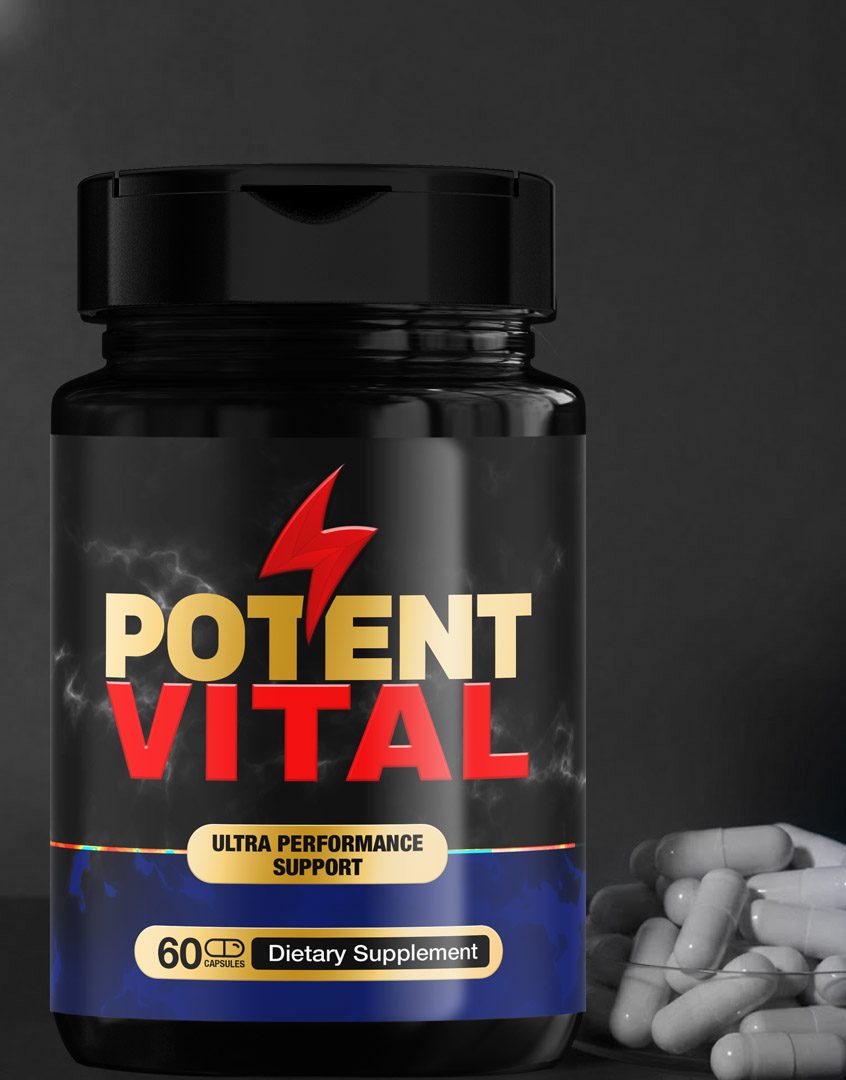
| You want to compare products before buying | A stated amount for each ingredient — not a blend total | Amount is the only thing that can be placed against a study | Read the label first, then compare: PotentVital · ColestZen |
| You already take a prescription (statin, blood-pressure, or blood-thinner) | A warning line about medicines and a named manufacturer | Some ingredients interact with prescription medicine; a clinician or pharmacist should review it | Cholesterol supplement guide — safety questions first |
| You are buying for one specific goal (cholesterol) | An ingredient matched to that exact outcome | “Circulation” and “cholesterol” are different measurements | ColestZen review → check terms |
| You are buying for one specific goal (circulation) | An ingredient matched to that exact outcome | One claim does not cover the other | PotentVital review → check terms |
| You want a product read line by line before deciding | A published, complete Supplement Facts panel | Most products reviewed here hide at least part of the amounts | ColestZen review — 18 ingredients, 0 amounts published |
| You are weighing a “men’s daily” formula | Per-ingredient amounts and a clear serving size | Bundled formulas often name ingredients without stating how much of each is present | PotentVital review → check terms |
A transparent label is useful, but it is not proof of a clinical benefit. If a product’s page reads like a condition treatment, see that as a reason to slow down, not to buy.
Our detailed reviews
Two products in this cluster have received a full label-and-terms review. Both are read as editorial subjects: we report what the label publishes and what it omits, and we flag claims the ingredient evidence does not support.
- PotentVital review — nine named ingredients, four with published amounts, and a page whose central vascular claim the evidence does not back.
- ColestZen review — a cholesterol-positioned product reviewed for label transparency and purchase terms.
A review on this site is not an endorsement. Where a product’s mechanism reads like a condition treatment, we say so, and we point the reader to a clinician for the underlying question rather than to the bottle.
Questions people ask
Do circulation supplements lower blood pressure? Research on individual ingredients reports effects on specific vascular measurements in specific groups. Those findings are not the same as a product lowering blood pressure in a general reader, and none of the products reviewed here is presented as doing so. Blood-pressure management is a clinical question.
Can a supplement replace prescribed cholesterol care? No. NCCIH advises following a clinician’s instructions for high cholesterol and not taking supplements instead of prescribed medicine. Supplements can also interact with medicines.
What does “men’s daily health” usually mean on a label? Often a blend of nutrients (such as magnesium and zinc) with botanicals studied for other outcomes. The label may name ingredients without stating amounts, which makes the claim hard to check against research.
How do I tell if a label is transparent? Look for per-ingredient amounts rather than a blended total, a named manufacturer, lot and expiration information, allergen and warning statements, and a refund policy stated in plain terms. Absent details should be recorded as “not found,” not assumed.
Are nitric-oxide boosters proven to work? The amino-acid research (L-arginine, L-citrulline) reports outcomes on defined measurements in defined studies. That is narrower than a blanket “boosts circulation” claim, and product-specific testing is usually absent.
Is a “proprietary blend” a red flag? Not automatically illegal, but it blocks comparison. A blend lets a label list ingredients while hiding how much of each it contains, so neither a reader nor a reviewer can check the product against the research on those ingredients. When the amount is the whole point, a hidden amount is the answer.
Should these products be taken with food? That depends on the ingredient, and it is a label-and-clinician question rather than a general one. Fat-soluble ingredients such as CoQ10 and omega-3 are commonly discussed alongside meals, while some forms are recommended away from certain foods. Follow the product’s own directions, and ask a clinician or pharmacist about interactions with anything you already take.
Bottom line
The honest comparison across heart health supplements — circulation, cholesterol, and men’s daily formulas alike — is label-first and evidence-matched. Identify the exact outcome claimed, verify the ingredient and amount, read the safety information, and keep the product’s promises inside the research actually available. A transparent label is useful, but it is not proof of a clinical benefit. No supplement on this hub is a substitute for measured risk factors or prescribed care. Use the links above to go deeper on the specific product or ingredient you are weighing.
If you want to see the method applied to a specific label: we read two products in this cluster line by line — PotentVital (nine ingredients, four amounts published) and ColestZen (a cholesterol-positioned formula). Neither is an endorsement; both show what a label does and does not disclose.
Sources
- National Center for Complementary and Integrative Health, “Cholesterol Management at a Glance”: https://www.nccih.nih.gov/health/cholesterol-management-at-a-glance (accessed October 9, 2026).
- National Center for Complementary and Integrative Health, “Red Yeast Rice”: https://www.nccih.nih.gov/health/red-yeast-rice (accessed October 9, 2026).
- National Institute of Diabetes and Digestive and Kidney Diseases, “High Blood Cholesterol”: https://www.niddk.nih.gov/health-information/heart-health/high-blood-cholesterol (accessed October 9, 2026).
- American Heart Association, “Supplemental Nutrition Assistance: Dietary Supplements”: https://www.heart.org/en/healthy-living/healthy-eating/eat-smart/supplements/study-finds-many-adults-take-supplements-without-telling-their-doctors (accessed October 9, 2026).
- U.S. Food and Drug Administration, “Questions and Answers on Dietary Supplements”: https://www.fda.gov/food/information-consumers-using-dietary-supplements/questions-and-answers-dietary-supplements (accessed October 9, 2026).
- Kennedy C, et al. Effect of Coenzyme Q10 on statin-associated myalgia and adherence to statin therapy: A systematic review. Atherosclerosis. 2020;299:1–8: https://pubmed.ncbi.nlm.nih.gov/32179207/ (accessed October 12, 2026).
- Forster D, et al. Effects of chronic nitrate supplementation on blood pressure in adults: a systematic review and meta-analysis. Nutr Res. 2026;146:111–120: https://pubmed.ncbi.nlm.nih.gov/41619653/ (accessed October 12, 2026).
This article is general educational information, not a diagnosis or personal medical advice. It links to detailed reviews but includes no product ranking or purchase call to action.
Facts checked: 9 October 2026 · VitalRoundup Editorial Team · Reviewed by VitalRoundup Editorial Team (sources and label data re-checked) · How we review