Berberine is one of the few supplement ingredients with a genuinely large body of randomised trial data behind it. It also has a problem that most pages selling it don’t mention: taken orally, very little of it reaches your bloodstream.
Both of those things are true at once, and understanding them together is the whole point of this page.
Quick answer
The trial evidence for berberine's effect on blood glucose is real and reasonably consistent. The problem is dose — the studies used 900–1,500 mg a day, and most single-capsule products can't get you there.
- Multiple meta-analyses of randomised trials show reductions in fasting glucose and HbA1c, but almost all trials were in people with diagnosed type 2 diabetes, not general adults.
- Oral bioavailability is under 1% by some estimates, so dose and formulation matter more here than for most ingredients.
- It interacts with several prescription drug classes — including metformin and warfarin — which makes it a talk-to-your-clinician ingredient, not a casual one.
Skip it if you take prescription medication, particularly for blood sugar or clotting, or you're pregnant or breastfeeding. This is not a self-manage ingredient.
What berberine is
Berberine is an alkaloid found in several plants, including barberry, goldenseal and the Coptis species used in traditional Chinese medicine. It’s sold as a supplement, usually as berberine hydrochloride, and it turns up in a lot of multi-ingredient formulas aimed at blood sugar or weight management.
It’s worth separating two questions that get muddled together:
- Does berberine do anything? — there’s a substantial trial literature here.
- Will the product you’re looking at deliver a dose that resembles the trials? — a much harder question, and often unanswerable.
The evidence, graded honestly
Most pages on this subject read berberine as one thing with one evidence level. It isn’t. The evidence is strong for some claims and weak for others, and the difference matters.
| Ingredient | Evidence | What it actually means |
|---|---|---|
| Blood glucose (fasting)Lowers fasting blood sugar | Strong | Consistent across multiple meta-analyses of randomised trials, but the populations were predominantly people with diagnosed type 2 diabetes. |
| HbA1cImproves long-term glucose control | Strong | Statistically significant reductions in pooled analysis, again mostly in diabetic populations over 1–3 months. |
| Insulin resistance (HOMA-IR)Improves insulin sensitivity | Moderate | Pooled effects are consistent, but the marker itself is a proxy measure rather than a clinical outcome. |
| Blood lipidsLowers LDL and triglycerides | Moderate | Reported reductions are modest and often measured alongside glucose-lowering medication, which makes the contribution hard to isolate. |
| Weight lossHelps you lose weight | Limited | Not the primary outcome in most trials. Where weight changed, it was usually a secondary finding in people also changing diet. |
| As a metformin substituteA natural alternative to diabetes medication | Weak | No trial supports replacing prescribed medication. This claim appears in marketing far more often than in the literature. |
Grades reflect the volume and consistency of randomised trial evidence as of October 2026 — not the size of any single effect. Note the gradient: a table where everything reads 'Strong' hasn't graded anything.
What the trials actually did
This is the part that matters most, and it’s usually left out.
The pooled analyses are consistent about the dose range and duration. The most recent large review of 50 randomised trials, covering 4,150 participants, reported the most common dosage as 0.9–1.5 g per day, over treatment cycles of one to three months. A separate meta-analysis of 37 trials and 3,048 patients found reductions in fasting glucose and HbA1c, and noted the effect size tracked the participants’ baseline glucose — people starting higher moved more.
Two things follow from that:
- Duration matters. Most trials ran at least a month. A one-week impression tells you nothing.
- Dose matters enormously. 900 mg is the floor of the studied range.
Who the research actually covered
The population in these trials is much narrower than the way berberine gets marketed.
| What the trials studied | What marketing usually implies | |
|---|---|---|
| Diagnosis | Predominantly adults with diagnosed type 2 diabetes | Anyone wanting “blood sugar support” |
| Baseline | Many started with elevated fasting glucose and HbA1c | Normal glucose handling |
| Setting | Supervised, with defined doses and follow-up | Self-directed, unspecified duration |
| Comparator | Placebo, metformin, or add-on to existing treatment | Nothing in particular |
That gap is not a technicality. A pooled effect measured in people whose starting glucose was high does not tell you what happens in someone whose glucose is already in the normal range — and the meta-analysis noted that effect size tracked baseline, meaning people starting lower moved less. It also means a trial in people already taking glucose-lowering medication answers a different question from one in people taking nothing.
If you don’t have a diagnosis, the honest reading is that this evidence doesn’t describe you.
How berberine compares with the medicines it gets named after
Berberine headlines usually pair it with metformin, but the more informative comparison is against the whole set of options a clinician might discuss. This is a map of what each one is, not a ranking of what works:
| Option | What it is | Evidence standard |
|---|---|---|
| Metformin | Approved prescription medicine | Trials required before approval; monitoring built into prescribing |
| Berberine | Supplement ingredient | Meta-analyses exist, but no approval requirement and no monitoring |
| GLP-1 receptor agonists | Approved prescription medicines | Large outcome trials, supervised titration |
| Cinnamon, chromium, ALA | Supplement ingredients | Mixed or contested meta-analyses, often at unmatched doses |
| Diet, movement, sleep | Behaviour | The strongest and least commercial lever in the whole list |
Two things follow. First, “natural versus pharmaceutical” is the wrong frame: the real difference is the system around each option — verification, monitoring, adjustment — not the plant origin. Second, everything in the bottom row also makes the rows above it work better, which is why it belongs in the conversation rather than underneath it.
We compare berberine and metformin as research subjects rather than as products in our berberine vs metformin breakdown. It is blunt about the one finding the marketing avoids: no trial we reviewed supports using berberine instead of prescribed glucose-lowering medication.
The query people actually type, answered plainly
Does berberine lower blood sugar? In pooled randomised trials, mostly in adults with diagnosed type 2 diabetes, fasting glucose and HbA1c both fell. The effect tracked baseline — people starting higher moved more.
How much do the trials use? Most commonly 900–1,500 mg per day, split into two or three doses, over one to three months. A single 300 mg capsule is not that.
Is it a replacement for metformin? No. Some trials studied berberine alongside glucose-lowering medication rather than instead of it, and that additive effect is exactly why unsupervised combining is risky.
Why does everyone mention bioavailability? Because a large share of an oral dose is not absorbed intact, so the amount on a label and the amount reaching circulation can diverge sharply.
What should I check on a label? Whether it names berberine HCl, how many milligrams per serving, how many servings per day, and whether those multiply to anything near the studied range.
The bioavailability problem
Here is the detail that changes how you read a supplement label.
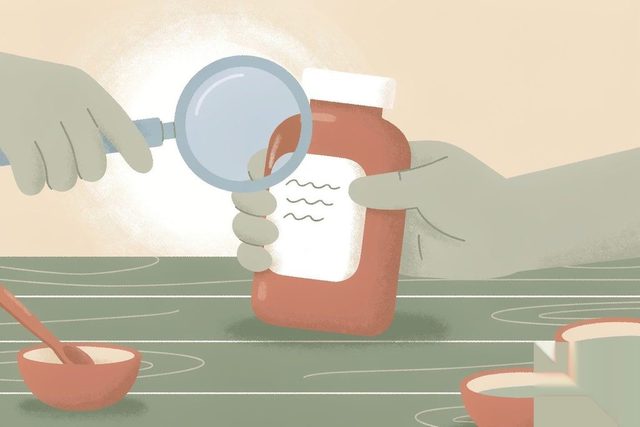
Berberine is poorly absorbed. The French food safety agency’s assessment notes that in vivo studies report less than 1% oral bioavailability, attributing it to limited intestinal absorption, P-glycoprotein efflux and extensive first-pass liver metabolism. Other sources put absolute bioavailability at under 5%. After a single 500 mg oral dose in healthy volunteers, plasma concentrations of unmetabolised berberine were measured in the range of 0.07–0.14 nM — extremely low.
Some formulators add piperine (black pepper extract) to improve absorption. Whether that co-formulation raises exposure to trial-equivalent levels is not something we could confirm from the published data we reviewed — the trials establishing the 900–1,500 mg range used plain berberine salts, not piperine-enhanced blends.
The dose you can actually verify
Most berberine capsules sold on their own deliver 250–500 mg. To reach the 900–1,500 mg range used in trials, you’d typically need two to three capsules a day. That’s a reasonable thing to plan around if you’re buying standalone berberine, because the label tells you exactly what you’re getting.
It gets murkier inside multi-ingredient formulas. When berberine is one of a dozen ingredients, the individual amount is often hidden inside a “proprietary blend” total, which means you can’t work out whether the dose is anywhere near the studied range.
The rule we apply to every formula we cover: record the per-ingredient amounts exactly as published on the label, and where an amount is not disclosed, say so plainly. An undisclosed amount is not the same as an adequate one — and “proprietary blend” is not an answer to the dose question this article keeps raising.
Drug interactions worth knowing
This is where berberine differs from most botanical ingredients in this category: the interaction list is specific and documented, not hypothetical.
- Metformin and other glucose-lowering drugs. Berberine has an additive glucose-lowering effect. Combining them without clinical supervision risks pushing blood sugar too low.
- Cytochrome P450 substrates. Berberine inhibits CYP2D6, CYP2C9 and CYP3A4. A crossover study in healthy volunteers found repeated 300 mg three-times-daily dosing reduced the activity of these enzymes, which affects how other drugs are metabolised.
- Warfarin. Berberine displaces warfarin from plasma protein binding, which can raise free drug levels.
- Pregnancy and breastfeeding. Not recommended. Berberine has been associated with a risk of haemolytic jaundice in newborns in cases of G6PD deficiency.
None of this is exotic. It’s the ordinary reason why an ingredient with real trial evidence still isn’t something to add to your routine on your own initiative.
What to do instead
If you’re concerned about your blood sugar, the interventions with the strongest evidence base are also the least interesting to read about: getting a diagnosis if you don’t have one, dietary changes, movement after meals, and sleep. A supplement sits underneath all of that, not instead of it.
And if you’re already on medication for blood sugar, the question isn’t “should I add berberine” but “should I ask my clinician about it” — because the answer changes what they need to monitor.
If you still end up looking at products, the checks are the same ones we run across the category: does the label disclose how much berberine it contains, does the studied form match the studied dose, and are the commercial terms stated plainly. We’ve applied them to GlucoTonic (current terms) and InsuFend (current terms) individually, where a hidden amount or an unverifiable claim is recorded rather than filled in.
Frequently asked questions
How much berberine do the trials use?
Is berberine a natural alternative to metformin?
Why does bioavailability matter so much for berberine?
What are the side effects?
Can I stop my medication if berberine works?
Related notes
→ Blood Sugar and Cholesterol Supplements Compared: An Evidence-Led Hub
Independent product research
We compare publicly documented ingredient lists, official pricing pages and verified customer reports. We do not accept payment for reviews and we do not publish claims a product's own manufacturer cannot substantiate.
Facts checked: . How we review
Reviewed by VitalRoundup Editorial Team — sources and label data re-checked. Review standards
The short version: berberine is one of the better-evidenced ingredients in this category, and the evidence is mostly about people with type 2 diabetes taking 900–1,500 mg a day for a month or more. Everything else — the weight-loss claims, the “natural metformin” framing — is either secondary or unsupported. And the bioavailability picture means the dose on the label is the first thing worth checking.
References
- Guo J, Chen H, Zhang X, et al.. The Effect of Berberine on Metabolic Profiles in Type 2 Diabetic Patients: A Systematic Review and Meta-Analysis of Randomized Controlled Trials. Oxidative Medicine and Cellular Longevity, 2021 (PMC8696197). pmc.ncbi.nlm.nih.gov/articles/PMC8696197/
- Liang Y, Xu X, Yin M, et al.. Glucose-lowering effect of berberine on type 2 diabetes: A systematic review and meta-analysis. Frontiers in Pharmacology, 2022 (PubMed 36467075). pubmed.ncbi.nlm.nih.gov/36467075/
- American Society for Nutrition. Overall and Sex-Specific Effect of Berberine on Glycemic and Insulin-Related Traits: a Systematic Review and Meta-Analysis of Randomized Controlled Trials. 2023 (20 trials, n = 1,761). www.sciencedirect.com/science/article/abs/pii/S00223
- ANSES (French Agency for Food, Environmental and Occupational Health & Safety). Berberine — risk assessment on isoquinoline alkaloids in food supplements. NUT2018SA0095EN — source of the <1% oral bioavailability figure. www.anses.fr/system/files/NUT2018SA0095EN.pdf
- Frontiers in Pharmacology. Efficacy and safety of berberine in type 2 diabetes: meta-analysis of 50 randomised controlled trials. 2024 (50 trials, n = 4,150) — source of the 0.9–1.5 g/day dose range. doi.org/10.3389/fphar.2024.1455534
Listing these does not mean we endorse any product containing berberine. Trials on an ingredient tell you about that ingredient, tested at a specific dose in a specific population — they do not tell you what a finished multi-ingredient product will do.