A supplement label can look precise while leaving important questions unanswered. “Natural blood sugar support” may refer to berberine, cinnamon, chromium, fiber, or a multi-ingredient blend, but the ingredient name alone does not establish a reliable outcome. A careful comparison starts with the exact claim, amount, formulation, and safety information.
This guide does not rank products or present a supplement as a treatment or replacement for prescribed care. Instead, it gives you a repeatable checklist: the same questions we ask when we compare any metabolic supplement on this site.

Compare the claim with the outcome
Ask whether a page is discussing fasting glucose, post-meal glucose, HbA1c, insulin, or a general wellness phrase. These are different outcomes. A short study measuring one laboratory marker cannot automatically support a long-term claim about complications or cardiovascular events.
Then identify the population, comparator, duration, and formulation used in the cited research. A study of an isolated ingredient does not necessarily apply to a blend containing several botanicals. A dose in a controlled trial is not a personal dosing instruction.
A quick filter that saves time: if a product page cites research but never names the study population or duration, see the citation as decoration until you verify it. A verifiable citation will usually survive a search of the author and year.
Read the entire label
Record each active ingredient, amount per serving, serving size, daily directions, other ingredients, allergen statement, warnings, manufacturer contact, lot information, and expiration date. Proprietary blends that list only a combined weight make it difficult to compare the product with research. If a product page does not provide the full label, record the missing information as Not found rather than estimating it from a marketing description.
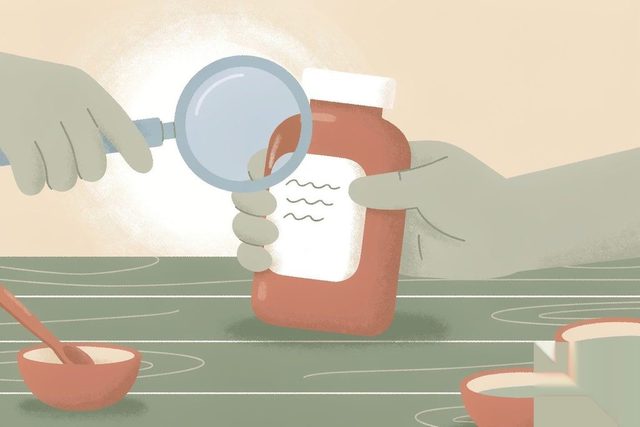
Look for duplicate ingredients when combining products. “Natural” does not mean free of interactions, and several products can expose a person to overlapping ingredients or pharmacologically active compounds.
Three label details people skip, and why they matter:
- Serving size vs. capsule count. A formula that looks inexpensive per bottle may require 4–6 capsules daily, which changes the real cost per day dramatically.
- “Other ingredients.” Fillers are rarely harmful, but the list tells you whether a product discloses its full composition — a transparency signal in itself.
- Warnings and allergen lines. A label that skips standard warnings is a red flag about the manufacturer’s overall quality practices, not just its caution level.
Common evidence questions
Berberine has been studied in metabolic research, but the results depend on formulation, dose, participants, and endpoints — we walk through the details in our berberine evidence review. Cinnamon research varies by species and preparation. Chromium has been studied for glucose-related outcomes, but evidence is not a reason to assume that every product containing it will help. Fiber-rich foods may support an overall eating pattern, but a fiber capsule is not interchangeable with every dietary intervention.
The National Center for Complementary and Integrative Health and the FDA both advise consumers to consider safety, evidence quality, and interactions. Neither source endorses a particular brand. A product citation should be opened and checked against the label. It should not be accepted simply because a page says “clinically studied.”
A worked example of the label-first method
Here is how the checklist plays out on two hypothetical products:
| Field | Product A | Product B |
|---|---|---|
| Active ingredients listed with amounts | Yes — 3 botanicals, each with mg dose | No — “1,200 mg proprietary blend” |
| Study cited per ingredient | One trial per ingredient, named | One general “clinical research” page |
| Serving size and daily directions | 2 capsules with meals | “Take as needed” |
| Warnings present | Full warning block | One line only |
| Refund terms | 60 days, stated on order page | Not stated |
Product A is easier to evaluate even if its formula is modest, because every field can be checked against research. Product B might contain excellent ingredients — but you cannot verify it, so the honest answer is “cannot compare.” When we review commercial products, this is the same table we build. Each field is marked found or not found, as in our Glucotonic review (check its current terms).
Medication and monitoring boundaries
People taking insulin or other glucose-lowering medicines should ask a qualified clinician or pharmacist before starting a supplement. A product that changes glucose may alter the risk of an unwanted low reading when combined with medication. Do not reduce or stop prescribed treatment because of an online comparison.
Persistent thirst, frequent urination, unexplained weight change, confusion, faintness, or repeated abnormal readings warrant appropriate medical assessment. A supplement cannot determine whether symptoms reflect diabetes or another condition.
Two related questions deserve direct answers:
Can a supplement replace metformin or another prescribed medicine? No. Prescription medicines go through trials designed to establish efficacy and safety for a specific condition. Supplements do not, and our berberine vs. metformin comparison explains why the two kinds of evidence are not interchangeable.
Is “natural” the same as “safe”? No. Botanical compounds can be pharmacologically active, which is exactly why they are studied — and why interactions with medication are a real consideration rather than a theoretical one.
A practical comparison table to build yourself
For each product, write the ingredient and amount, the study matched to it, the measured outcome, the warnings, the seller identity, and the full purchase terms. Leave any unverified field blank or mark it Not found. The product with the longest ingredient list is not automatically the strongest choice; transparency and evidence match are more useful criteria.
If food-first options are your starting point, our guide to foods that blunt blood sugar spikes pairs naturally with this checklist — diet context first, supplements as a secondary consideration.
Frequently asked questions
Do I need a supplement with 10+ ingredients to get support? Not necessarily. Multi-ingredient blends are harder to match to research, and a well-studied single ingredient at a disclosed dose is often easier to evaluate than a large blend.
How long before I could expect to notice anything? Research windows for glucose-related markers typically run weeks to months, not days. Be cautious of pages promising immediate results, and keep any monitoring your clinician has recommended unchanged unless they advise otherwise.
Where is the safest place to check interactions? A pharmacist can check a supplement’s active ingredients against your medication list far more reliably than any article or product page.
Sources and access date
- NCCIH, “Using Dietary Supplements Wisely”: https://www.nccih.nih.gov/health/using-dietary-supplements-wisely (accessed October 9, 2026).
- FDA, “Questions and Answers on Dietary Supplements”: https://www.fda.gov/food/information-consumers-using-dietary-supplements/questions-and-answers-dietary-supplements (accessed October 9, 2026).
- CDC, “Diabetes and Healthy Eating”: https://www.cdc.gov/diabetes/healthy-eating/index.html (accessed October 9, 2026).
- NIDDK, “Diabetes Diet, Eating, & Physical Activity”: https://www.niddk.nih.gov/health-information/diabetes/overview/diet-eating-physical-activity (accessed October 9, 2026).
- Davis PA, et al. Cinnamon intake lowers fasting blood glucose: meta-analysis. J Med Food. 2011;14(9):884–889: https://pubmed.ncbi.nlm.nih.gov/21480806/ (accessed October 12, 2026).
- Yin RV, et al. Effect of chromium supplementation on glycated hemoglobin and fasting plasma glucose in patients with diabetes. Nutr J. 2015;14:14: https://pubmed.ncbi.nlm.nih.gov/25971249/ (accessed October 12, 2026).
- Bailey CH. Improved meta-analytic methods show no effect of chromium supplements on fasting glucose. Biol Trace Elem Res. 2014;157(1):1–8: https://pubmed.ncbi.nlm.nih.gov/24293356/ (accessed October 12, 2026).
This article is general educational information, not diagnosis, treatment, or individualized supplement advice. No product CTA is included.
Related notes
→ Blood Sugar and Cholesterol Supplements Compared: An Evidence-Led Hub
Facts checked: 9 October 2026 · VitalRoundup Editorial Team · Reviewed by VitalRoundup Editorial Team (sources and label data re-checked) · How we review