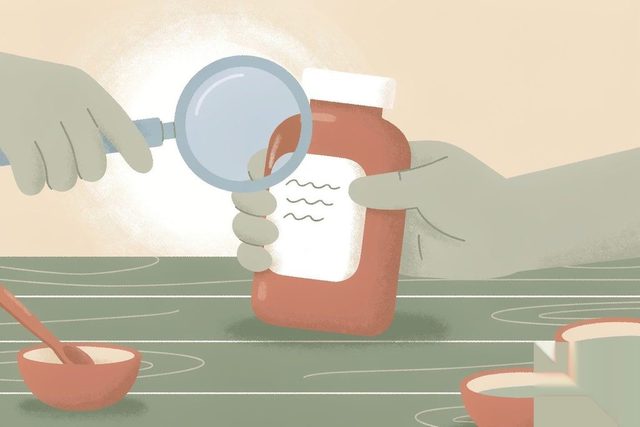
Blood sugar supplements — and the cholesterol products sold beside them — are among the most searched and most heavily marketed categories in the aisle. Most comparison pages answer the wrong question first: “which one is best?” That framing skips the parts you can actually check — an ingredient’s trial record, what the label discloses, and the purchase terms. This hub gathers our cluster reporting in one place so you can compare by evidence and transparency rather than by slogan.
If you are managing diagnosed diabetes, high cholesterol, or any prescribed metabolic medication, the most useful step is a conversation with your clinician. Supplements sit underneath diet, movement, and prescribed care, not instead of it. Nothing here is a substitute for that conversation, and nothing here recommends replacing prescribed treatment with a product.

How we compare these supplements
Our comparison method is the same across every product and ingredient we cover. It is deliberately narrow. We record what a label publishes, what the published research on an ingredient shows, and what the offer terms actually are. Then we state the limits of each. Trial data in one population does not make a finished product predictable in another.
Four things drive every comparison on this site:
- Transparency. Does the label name each ingredient and state an amount? A “proprietary blend” that gives only a combined weight cannot be placed against any study. Where an amount is not published, we say so plainly.
- Study design. We look at who was studied (healthy adults vs. people with a diagnosis), the comparison group, the duration, the ingredient form, and the dose. Findings from one population do not transfer automatically to another.
- Dose and formulation. The amount on a label and the amount in a trial can diverge sharply, especially for poorly absorbed ingredients. If a product does not state a per-ingredient amount, there is nothing to compare against the research.
- Purchase terms. Identity of the seller, current price, shipping, subscription terms, refund policy, and customer-service contact are part of the review. These change, so an old screenshot is not evidence.
A study of an ingredient is not evidence that a finished multi-ingredient product does the same thing, and a testimonial is not evidence in any direction. With that in mind, here is the comparison frame we apply to the cluster.
| Factor | Why it matters | What to check on the label |
|---|---|---|
| Ingredient transparency | A named ingredient with no amount cannot be placed against research. | Each ingredient listed separately, with a stated amount in mg, mcg, or IU. Avoid “proprietary blend” totals. |
| Study population | Trials often enrol people with a diagnosis, not general adults. | Check whether the cited research matches your situation rather than assuming it applies broadly. |
| Dose vs. trial range | Effects in trials come with a dose range; a capsule may deliver far less. | Per-serving amount compared with the range used in published studies. |
| Bioavailability | Poor oral absorption can make label amount and circulating amount differ. | Formulation notes; whether absorption was studied at the labelled dose. |
| Drug interactions | Some botanicals affect how prescription medicines are metabolised. | Warnings section; any note to consult a clinician if on medication. |
| Purchase terms | Refund policy and billing model are measurable, unlike a health claim. | Refund window, auto-ship status, stated retailer, and contact details. |
Blood-sugar support evidence
The best-evidenced ingredient in this cluster is berberine. It is also the one with the sharpest gap between marketing and trial reality. Our evidence write-up walks through the randomised-trial record. Multiple meta-analyses report reductions in fasting glucose and HbA1c, almost entirely in people with diagnosed type 2 diabetes, at daily doses of 900–1,500 mg over one to three months. The catch is absorption. Assessments describe oral bioavailability under 1% in some studies, which is why the dose on the label is the first thing worth checking.

→ Berberine for blood sugar: what the clinical evidence actually shows
Two follow-on pieces matter for anyone reading a label. The HCl dosing and bioavailability article explains why formulation and split dosing change what reaches circulation, and why a single 300 mg capsule may not resemble the studied exposure. The berberine-vs-metformin comparison is blunt about a finding the marketing rarely states. No trial we reviewed supports using berberine instead of prescribed glucose-lowering medication. The additive effect is exactly why combining them without clinical supervision is risky.
→ Berberine HCl: dosing and bioavailability
→ Berberine vs metformin: what the evidence does and doesn’t show
For readers who want a wider scan than a single ingredient, our natural blood-sugar support round-up surveys the category by the same transparency rules, and our foods article covers the non-supplement levers — meal order, fibre, and movement after eating — that the strongest evidence actually points to.
→ Best natural blood-sugar support supplements: an evidence checklist
→ Foods that spike blood sugar, and what actually stabilises it
Cholesterol and circulation
Cholesterol is the category where label transparency matters most. Unlike energy or general wellness, it is a condition with an enormous, well-funded treatment evidence base — statins and other lipid-lowering medicines have been tested in trials enrolling hundreds of thousands of people. A supplement with undisclosed amounts cannot be placed anywhere on that landscape, because you cannot know whether an ingredient is present at a studied dose, a trace, or anywhere between.
Our guide to cholesterol-support supplements explains how to read this category by label and citation rather than by promise. It covers what regulated treatment actually looks like, and why an unquantified blend leaves you without a comparison point.
→ Cholesterol support supplements: an evidence and label guide
Our ColestZen review is an editorial examination of one product in this space, not a recommendation. It is included here as a worked example of the transparency failures we look for: eighteen ingredients named with no amounts published, and a citation list that references ingredients absent from the formula. It is a real product with a stated retailer and a 60-day refund window — but the label is not checkable, and we are clear about that distinction. Read it as a method demonstration, not as a suggestion to buy.
→ ColestZen review: ingredient transparency examined
Which option fits your situation
The evidence above is only useful once it maps onto your own case. Use the table below to turn the comparison into a decision.
| Your situation | What to look for on the label | Why it matters | Next step |
|---|---|---|---|
| You have diagnosed type 2 diabetes and take prescribed medicine | A named ingredient with a stated dose, plus an interaction warning | Trial effects are reported at specific doses, and some ingredients interact with glucose-lowering medicine | Berberine vs metformin — why combining needs clinical supervision |
| You want a general “support” product without a diagnosis | A stated amount for each ingredient | Unpublished amounts cannot be matched to any study, so the claim cannot be checked | GlucoTonic review → check terms |
| You are specifically looking at berberine | The HCl form and the mg per serving | Berberine has the clearest trial record in this cluster, at 900–1,500 mg/day | Berberine for blood sugar — what the trials found |
| You want a cholesterol-positioned formula too | A named ingredient with a stated amount | Cholesterol and blood sugar are different measurements | ColestZen review → check terms |
| You would rather change diet than add a capsule | Meal order, fibre, and movement after eating | These non-supplement levers carry the strongest, least contested evidence | Foods that spike blood sugar — meal order and portions |
| You want to see a full product label read line by line | A published, complete Supplement Facts panel | Most formulas in this cluster hide at least part of the amounts | InsuFend review — label and terms examined |
A study of an ingredient is not evidence that a finished product behaves the same way. Where a page hides the amounts, read that as the finding.
Our detailed reviews
Two product reviews sit inside this cluster. Both follow the same method: report what the page publishes, state what it does not, and keep health claims separate from purchase terms.
The Glucotonic review works through the label, the claims, and the offer. As with every product we cover, the conclusion is about whether the information on the page lets you compare it against research — not about whether it “works.”
The ColestZen review, noted above, is the clearest example in the cluster of why a named-but-unquantified formula is a limit on comparison rather than a verdict on the product.
Questions people ask
Are blood-sugar supplements proven to work? The honest answer depends on the ingredient and the population. Berberine has a consistent randomised-trial record for fasting glucose and HbA1c, almost entirely in people with diagnosed type 2 diabetes at specific doses. Most other ingredients in this category have small, short, or mixed human data. A study on an ingredient does not tell you what a finished product will do, especially when doses are unpublished.
Can a supplement replace my diabetes or cholesterol medication? No. We found no trial evidence supporting the replacement of prescribed treatment, and regulators warn consumers against pages that imply otherwise. Changes to prescribed metabolic medication are a decision for you and your clinician, who need to monitor the result.
Why does label dose matter so much? Because effects in trials come with a dose range, and a capsule may deliver far less than that range. For poorly absorbed ingredients such as berberine, the gap between “a trial used 1,200 mg” and “a capsule contains 300 mg” is the difference between studied exposure and something lower. Where a product hides amounts in a blend, there is nothing to compare.
What is the difference between a study finding and a product claim? A study reports what happened to a specific group, at a specific dose, for a specific duration. A product claim is what a seller says the bottle does. The two are not the same, and a citation on a sales page is only meaningful if the cited study actually tested an ingredient that is in the formula, at a disclosed amount.
Is a proprietary blend a problem? It is a transparency limit. A blend that lists a combined weight but not individual amounts prevents a meaningful comparison with any study. An undisclosed amount is not the same as an adequate one, and “optimally dosed” is a description, not a measurement.
How should I read a health testimonial on a product page? As an anecdote, not evidence. Specific clinical numbers in anonymous testimonials — “LDL dropped by 35 points” — are the exact pattern health regulators caution consumers about. They cannot be verified and should not drive a purchase or a health decision.
Bottom line
The usable question for this cluster is not “which supplement is best” but “what can I actually check, and what can’t I.” The evidence is real for some ingredients in some populations. It is weakest or absent for others, and almost always quieter than the marketing. The strongest, least interesting levers sit underneath any product: a diagnosis if you don’t have one, dietary pattern, movement after meals, and any prescribed care you’re already on.
Compare by transparency first: a named ingredient with a stated amount you can place against research beats a longer ingredient list with no numbers every time. Where a label or page won’t let you check the dose, read that as the finding, not a footnote. And if prescribed medication is part of your picture, the conversation to have is with your clinician, not a checkout page.
If you want to see the method applied to a specific label: we read two products in this cluster line by line — GlucoTonic (six ingredients, two amounts published) and ColestZen (eighteen ingredients, none quantified). Neither is an endorsement; both show what a label does and does not disclose.
Sources
- National Institute of Diabetes and Digestive and Kidney Diseases (NIDDK), “Insulin, Medicines, & Other Ways to Manage Diabetes”: https://www.niddk.nih.gov/health-information/diabetes/overview/insulin-medicines-treatments (accessed October 9, 2026).
- National Center for Complementary and Integrative Health (NCCIH), “Berberine: What You Need To Know” (evidence and safety overview): https://www.nccih.nih.gov/health/berberine (accessed October 9, 2026).
- National Center for Complementary and Integrative Health (NCCIH), “Diabetes and Dietary Supplements”: https://www.nccih.nih.gov/health/diabetes-and-dietary-supplements (accessed October 9, 2026).
- National Heart, Lung, and Blood Institute (NHLBI), “High Blood Cholesterol”: https://www.nhlbi.nih.gov/health/high-blood-cholesterol (accessed October 9, 2026).
- U.S. Food and Drug Administration (FDA), “Dietary Supplements” (supplements are not reviewed for safety or effectiveness before sale): https://www.fda.gov/food/dietary-supplements (accessed October 9, 2026).
- American Diabetes Association (ADA), “Blood Sugar and Exercise”: https://diabetes.org/health-wellness/fitness/blood-sugar-and-exercise (accessed October 9, 2026).
- Guo J, Chen H, Zhang X, et al. “The Effect of Berberine on Metabolic Profiles in Type 2 Diabetic Patients: A Systematic Review and Meta-Analysis of Randomized Controlled Trials.” Oxidative Medicine and Cellular Longevity, 2021 (PMC8696197): https://pmc.ncbi.nlm.nih.gov/articles/PMC8696197/ (accessed October 9, 2026).
Facts checked: 9 October 2026 · VitalRoundup Editorial Team · Reviewed by VitalRoundup Editorial Team (sources and label data re-checked) · How we review