GlucoTonic — sometimes written Gluco Tonic — is sold as a liquid tincture for blood-sugar support, taken under the tongue each morning. It names six botanicals. It publishes amounts for two of them.
That gap is the whole review, so let’s not bury it: on a blood-sugar product, the amount per serving is the part you can compare against research. Six names and two numbers is not a formula you can check.

Quick answer
A six-ingredient tincture priced at $49–$79 a bottle with a 90-day refund window. Two ingredients carry stated amounts; four do not. The refund terms are the strongest part of the offer, and the dose transparency is the weakest.
- Six botanicals are named. Amounts appear for two — eleuthero and Gymnema — and not for the other four.
- The framing leans on fatigue and energy as much as on blood sugar, which matters if you're comparing it against products that publish full label amounts.
- The 90-day refund window is longer than the 30 days most competitors offer. Confirm the start date on the order page before buying.
Skip it if you're looking for a replacement for prescribed diabetes care. Nothing on this page supports that, and we'd say the same about every product in this category.
Product overview
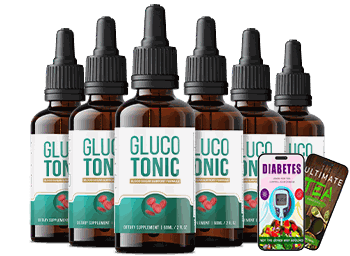
GlucoTonic
A liquid tincture sold as daily blood-sugar and energy support.
- Format
- Tincture, two droppers daily
- Sold as
- Blood-sugar and energy support
- Ingredients named
- 6
- Amounts published
- 2
GlucoTonic review snapshot
Six named; two carry amounts
Ingredient-level studies don't establish a finished-product result
$49 per bottle on the best displayed tier
90-day refund window — longer than most in this category
Energy and fatigue framing runs ahead of the label
Our verdict: Recognisable botanicals with partial dose disclosure and unusually long refund terms. The four unquantified ingredients are the reason you can't compare it to study doses.
Secure checkout · Verify the current price and refund terms on the order page.
Product image: manufacturer-supplied promotional asset, reproduced as shown on the vendor's own page.
What we checked, and how
Two things here are measurements rather than opinions, so it’s worth saying exactly how they were made.
The label. We read the ingredient list on the manufacturer’s own sales page and counted what carries a stated amount. Our rule across this site is the same one we apply everywhere: what the page publishes, we report; what it doesn’t, we say is absent. We do not infer amounts from marketing language.
The terms. We read the price tiers, the shipping rules and the refund window from the order section of the same page. Prices and terms change; the numbers below are what the page displayed when we looked, and you should confirm them at checkout.
One note on scope: we review the label and the offer. We don’t run trials, and we don’t read a testimonial as evidence.
What’s actually in it
Straight from the ingredient list on the sales page, in their order:

Eleuthero · Coleus · Maca root · African mango · Guarana · Gymnema
The page describes each in a single line: eleuthero for energy and fatigue, coleus as a fat-burning aid, maca for energy, African mango as a fat-burning agent, guarana to stimulate metabolism, and Gymnema for heart and blood-sugar support.
Two observations that don’t require any expertise:
- Half the list is aimed at energy, not blood sugar. Coleus, maca, African mango and guarana are weight-management and stimulant-adjacent ingredients. Only Gymnema is a recognisable blood-sugar botanical. If you came to this page for glucose support, four of the six names are doing a different job.
- Guarana and coleus are not neutral additions. Guarana is a caffeine-bearing plant, and coleus is a stimulant-adjacent botanical. If you’re sensitive to stimulants or you take medication, that’s a conversation for your clinician, not a marketing page.
The six ingredients, briefly
What follows is what the published literature says about each ingredient on its own — not about this tincture.
Eleuthero (also called Siberian ginseng) is studied mainly for endurance and perceived fatigue. Trials exist, they are small, and they measure exercise tolerance rather than glucose. Amount disclosed on this label.
Coleus is studied around fat metabolism and, in some work, blood pressure. Human trial data is limited. Amount not disclosed.
Maca root has trial data for libido, energy and mood — usually small studies over weeks. It is not a glucose ingredient. Amount not disclosed.
African mango (Irvingia gabonensis) has small trials reporting changes in body weight and lipids. Results have not been reproduced at scale. Amount not disclosed.
Guarana supplies caffeine and is studied for cognitive and metabolic effects at caffeine-equivalent doses. Amount not disclosed — which is the one that matters most here, because caffeine dose is the variable that governs how it feels.
Gymnema (Gymnema sylvestre) is the most studied blood-sugar botanical on the list, with trials in both healthy volunteers and people with type 2 diabetes. Effects on fasting glucose have been reported; the studies are typically small and short. Amount disclosed on this label.
The evidence, ingredient by ingredient
This is where the difference between “named” and “quantified” becomes concrete.
| Ingredient | Evidence | What it actually means |
|---|---|---|
| Gymnema sylvestreSupports healthy blood sugar | Limited | The most-studied ingredient here, with small trials in type 2 diabetes reporting changes in fasting glucose. The research base is real but narrow, and dose matters. |
| EleutheroEnergy and fatigue | Limited | Studied for endurance and perceived fatigue in small trials. Nothing establishes a glucose effect. |
| GuaranaStimulates metabolism | Limited | Its effects track its caffeine content. Without a stated amount you can't tell what caffeine load you're getting. |
| African mangoFat-burning agent | Weak | Small trials with reported weight and lipid changes that have not been reliably reproduced. |
| ColeusFat-burning aid | Weak | Limited human data, mostly around blood pressure and metabolic markers rather than a studied outcome. |
| Maca rootBoosts energy | Weak | Has trial data for libido and mood. For blood sugar or metabolism, essentially nothing to cite. |
Grades reflect the strength of published human evidence for the ingredient in this context — not the quality of the ingredient itself. Where a claim is unproven rather than disproven, we say so.
Price and terms
Read from the order section of the manufacturer’s page:
| Package | Supply | Price | Shipping | Per bottle |
|---|---|---|---|---|
| Try two — 2 bottles | 60 days | $158 | + shipping | $79 |
| Most popular — 3 bottles | 90 days | $207 | Free (US) | $69 |
| Best value — 6 bottles | 180 days | $294 | Free (US) | $49 |
Two terms worth knowing before you buy:
- 90-day money-back guarantee. Longer than the 30 days most competitors offer. Check whether the window starts at order or delivery — on international shipping that difference can be a week or more.
- Six bottles is the default recommendation. The page states that 96% of customers take the six-bottle option. That’s a statement about the sales page, not about what you need.
GlucoTonic against the category’s common baseline
The baseline below describes practices common across direct-to-consumer supplement sales pages in this category — not any specific competitor. It is a terms-and-transparency comparison, not an effectiveness ranking.
| Dimension | Category common practice | GlucoTonic as reviewed |
|---|---|---|
| Ingredient disclosure | Names only, or partial amounts | Six named, two with stated amounts |
| Dose matching to studies | Rarely possible | Not possible for four of six ingredients |
| Refund window | 30 days is typical | 90 days, stated |
| Auto-ship / recurring billing | Frequent complaint pattern | Not stated as present; confirm at checkout |
| Anchor pricing (struck-through totals) | Common | Present ($358/$537/$1,074 shown struck) |
| Format | Capsules dominate | Liquid tincture |
The refund window is the stand-out term here — a 90-day stated window is materially longer than the category’s typical 30 days, and that is a genuine structural difference, not marketing. The dose disclosure, meanwhile, remains below what a checkable label would show.

Opens the manufacturer's own order page. Confirm the price, shipping and refund window there before ordering — they change.
Sold via BuyGoodssecure checkout90-day money-back guaranteeaffiliate link · we may be paid · the price you pay is unchangedOur scoring
Mixed
A recognisable botanical list, partial dose disclosure, and refund terms that beat most of the category. The four names without amounts are what stops this being a formula you can check.
| Ingredient transparencySix ingredients named, two with stated amounts | 2.5 |
|---|---|
| Evidence alignmentHalf the list is aimed at energy, not glucose | 2.0 |
| Value for money$49 per bottle on the best tier — mid-category | 3.0 |
| Purchase terms90-day refund window is genuinely longer than average | 4.5 |
| Claim accuracyEnergy and fatigue framing outruns the label | 2.0 |
What works
- 90-day money-back window, which is longer than the 30 days most competitors give.
- The tincture format is stated clearly, including how to take it and what to do if the taste doesn't suit you.
- Two ingredients carry published amounts rather than none at all, which is more than some products in this category offer.
What doesn't
- Four of six ingredients publish no amount — you cannot compare the serving with any studied dose.
- Half the ingredient list is aimed at energy and fat metabolism rather than blood sugar, which is what the product is named for.
- Guarana and coleus are stimulant-adjacent, and without amounts you can't tell what load you're getting.
- Crossed-out anchor prices on the order page that can't be verified.
- The single-bottle equivalent is expensive at $79, which pushes you toward a larger upfront order.
Who it suits, and who should skip it
It’s a reasonable look if you want a once-daily liquid rather than a capsule, you’ve already worked through the free basics, and you value a long refund window. The 90-day guarantee means the financial downside is limited to return shipping if it doesn’t suit you.
Skip it if you want to compare ingredient amounts against research before buying — four of six amounts aren’t published, so there’s nothing to compare. Take a pass as well if you’re sensitive to stimulants or take prescription medication, because two ingredients on the list are stimulant-adjacent and unquantified.
And it’s the wrong purchase entirely if you’re hoping to replace prescribed diabetes care. Start with your clinician, then compare any supplement claim with the underlying evidence before buying anything.
The bottom line
GlucoTonic isn’t a scam. It’s a legitimate product with an unusually long refund window, a partially disclosed label, and a formula that spends half its ingredient list on energy rather than glucose.
The thing to understand before you buy is the same asymmetry that runs through this category: the terms are checkable and they’re good; most of the formula isn’t checkable at all. Whether that trade is acceptable is your call — but now you’re making it with the same information we had.
How VitalRoundup rates supplements
Every score on this site comes from the same five checks. None of them measure whether a product "works" as a treatment — that is a clinical question we do not answer. They measure how verifiable, fairly priced, and honestly presented the product is.
- Ingredient transparency. Are amounts — in mg, mcg, or CFU — printed on the label, or hidden in a blend?
- Evidence alignment. Does the published human research actually point at this stated use?
- Value for money. What you pay versus what is verifiably in the bottle.
- Purchase terms. Refund window, auto-ship, and subscription clarity.
- Claim accuracy. Do the marketing claims exceed what can be independently checked?
| Score | Meaning |
|---|---|
| 4.5–5.0 | Excellent |
| 3.5–4.4 | Good |
| 2.5–3.4 | Mixed |
| 1.5–2.4 | Weak |
| 0.0–1.4 | Poor |
We are an editorial team, not a clinic. Our reviews are general educational information, not diagnosis or treatment, and they are not a substitute for advice from your own qualified clinician.
References
Frequently asked questions
Is GlucoTonic a scam?
Where can I read real Gluco Tonic reviews?
How much of each ingredient does GlucoTonic contain?
Does GlucoTonic have side effects?
Can GlucoTonic replace diabetes medication?
Where can I buy GlucoTonic?
How long is the refund window?
Related notes
→ Blood Sugar and Cholesterol Supplements Compared: An Evidence-Led Hub
→ Berberine for blood sugar: what the clinical evidence actually shows
→ Foods that spike blood sugar, and what actually stabilises it
→ Best natural blood-sugar support supplements: how we’d compare them
→ InsuFend Review: another blood-sugar formula we checked
Independent product research
We compare publicly documented ingredient lists, official pricing pages and verified customer reports. We do not accept payment for reviews and we do not publish claims a product's own manufacturer cannot substantiate.
Facts checked: . How we review
Reviewed by VitalRoundup Editorial Team — sources and label data re-checked. Review standards