InsuFend — sometimes written Insu Fend — is sold as a daily capsule for blood-sugar support. It names eight ingredients, offers a 60-day refund, and — like most products in this category — publishes an amount for none of them.
That last point is the one worth understanding before you read the price. On a supplement, the amount is most of the argument.
Quick answer
Eight recognisable ingredients with no published quantities, priced at $49–$69 a bottle. The refund terms are reasonable; the label transparency is not. You cannot check whether any ingredient is present at a level resembling a study.
- Eight ingredients are named — six botanicals and minerals plus two vitamins. Not one carries an amount, in mg, mcg, IU or otherwise.
- Chromium and gymnema both have published trial literature, but it is modest and inconsistent — and without a quantity you can't tell where this capsule sits relative to any of it.
- The vendor's page makes disease-level claims (a 'root cause' of type 2 diabetes, repairing the beta-cell glucose sensor). Those are marketing statements, not findings this review can confirm.
Skip it if you take prescription glucose-lowering medication or monitor your blood sugar. A supplement is not a substitute for medication, and this one publishes nothing you could compare with a study dose.
Opens the manufacturer's order page. The price and refund window are set there — confirm both before ordering.
Sold via BuyGoodssecure checkout60-day money-back guaranteeaffiliate link · we may be paid · the price you pay is unchanged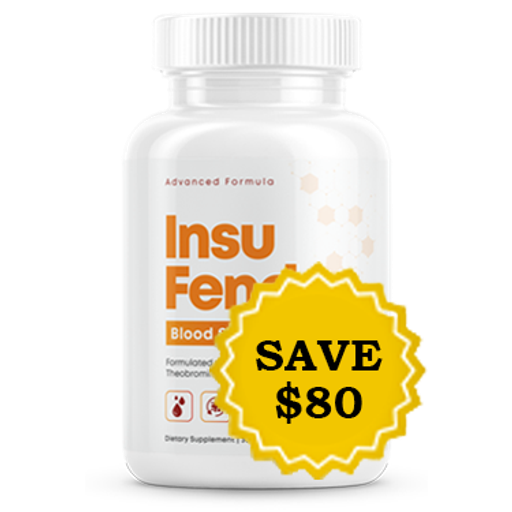
Product overview
InsuFend
A multi-ingredient capsule sold as everyday blood-sugar support.
- Format
- Capsule, once daily
- Sold as
- Blood-sugar support
- Ingredients named
- 8
- Amounts published
- 0
InsuFend review snapshot
Eight ingredients named; zero amounts published
Ingredient trials are modest and cannot be matched to this dose
$49 per bottle on the best displayed tier
60-day refund; one-time purchase stated
Disease-level claims outrun anything the label or evidence supports
Our verdict: Recognisable ingredients and decent refund terms, but the missing quantities make the finished formula impossible to compare with any study dose.
Secure checkout · Verify the current price and refund terms on the order page.
Product image: manufacturer-supplied promotional asset, reproduced from the seller's own sales page.
What we checked, and how
Two things here are measurements rather than opinions, so it’s worth saying exactly how they were made.
The ingredient list comes from the manufacturer’s own sales page. The prices and package terms were read from that same page’s order section, not from a review site — several third-party pages quote prices that don’t match what the order page actually charges.
The missing quantities were checked by searching the rendered text of the page for dosage units. The result: zero occurrences of “mg”, “mcg”, “IU”, or any number followed by a unit. It isn’t buried in a footnote. It isn’t there.
What’s actually in it
Straight from the label list, in the order the page presents them:
Gymnema Sylvestris · Cinnamon bark · Eleuthero root · Green tea · Theobromine · Chromium · Vitamin B1 · Vitamin D
Two observations that don’t require any expertise:
- The blend mixes a few studied ingredients with several that have almost no blood-sugar literature. Gymnema, cinnamon and chromium have been trialled for glycemic markers. Eleuthero, theobromine and green tea sit further from that evidence base, and theobromine in particular is a cocoa compound studied for cardiovascular endpoints rather than glucose.
- Nothing here is unusual or exotic. Every ingredient is a recognisable, inexpensive botanical or nutrient. That isn’t automatically bad — but it means the product’s value rests on the blend and the dose, and the dose is the one thing the label withholds.
The ingredients, briefly
These are the parts of the InsuFend list you can look up independently. What follows is what the published literature says about each ingredient on its own — not about this capsule.
Gymnema Sylvestre. The most on-target inclusion. A 2021 systematic review and meta-analysis of gymnema supplementation in type 2 diabetes reported reductions in fasting glucose and HbA1c, but the underlying trials were small, short, and largely from a single region. The label states no amount, so the capsule can’t be placed against any studied dose.
Cinnamon bark. Cinnamon has been reviewed more than once. An earlier meta-analysis found a small effect on fasting glucose but no significant effect on HbA1c; a later updated review reported improvements in some glycemic markers. Read together, the picture is modest and inconsistent rather than settled.
Chromium. A systematic review of randomised trials found no clear effect of chromium on glucose metabolism in people without diabetes, and described the evidence in type 2 diabetes as inconclusive. Chromium is a trace element with a plausible mechanism, not a demonstrated clinical effect.
Green tea. The relevant trials use EGCG, green tea’s main catechin. A 2025 meta-analysis of randomised trials found modest, inconsistent effects on glycemic markers. The page’s phrase “blocks cellular glucose uptake” describes a laboratory mechanism, not a measured outcome in people.
Eleuthero root. An adaptogen with very little human metabolic-outcome data. It appears in general-wellness formulas; the blood-sugar literature has little to say about it.
Theobromine. A cocoa-derived compound studied mainly for cardiovascular endpoints. There is no meaningful glucose literature to match it against.
Vitamin B1 (thiamine) and Vitamin D. Both are essential nutrients, and low status is more common in some people with diabetes. But correcting a deficiency is not the same as lowering glucose: the largest randomised trial of vitamin D in this area found it did not significantly reduce progression to type 2 diabetes in high-risk adults.
The evidence, ingredient by ingredient
| Ingredient | Evidence | What it actually means |
|---|---|---|
| Gymnema SylvestreSupports healthy blood sugar and weight management | Limited | A 2021 meta-analysis reported reductions in fasting glucose and HbA1c in type 2 diabetes, but the trials were small, short and mostly from one region. No amount is disclosed, so this product can't be matched to any studied dose. |
| Cinnamon barkSupports healthy blood sugar and cholesterol | Limited | Reviewed more than once. One meta-analysis found a small fasting-glucose effect but no significant HbA1c effect; a later update reported improvements in some markers. Modest and inconsistent. |
| ChromiumEnhances the action of insulin | Weak | A systematic review of randomised trials found no clear effect on glucose metabolism in people without diabetes, and inconclusive evidence in type 2 diabetes. |
| Green tea (EGCG)Blocks cellular glucose uptake | Limited | EGCG has been meta-analysed for glycemic markers with modest, inconsistent results. 'Blocks glucose uptake' is a mechanism phrase, not a demonstrated outcome. |
| Eleuthero rootCirculatory and inflammatory support | Weak | An adaptogen with little human metabolic-outcome data. There is no direct blood-sugar literature to match it against. |
| TheobromineBoosts blood flow and supports a healthy pancreas | Weak | A cocoa-derived compound studied mainly for cardiovascular endpoints. Nothing specific to pancreatic function or glucose control. |
| Vitamin B1 (thiamine)Supports beta cells and nerve health | Limited | An essential nutrient whose deficiency is more common in diabetes, but supplementing beyond sufficiency has not been shown to improve glycemic control. |
| Vitamin DSupports bone health and immunity | Weak | The D2d randomised trial found vitamin D supplementation did not significantly reduce progression to type 2 diabetes in high-risk adults. A nutrient, not a glucose-lowering agent. |
Grades reflect the strength of published human evidence for the ingredient in this context — not the quality of the ingredient itself. Where a claim is unproven rather than disproven, we say so.
Price and terms
Read from the order section of the page on 9 October 2026:
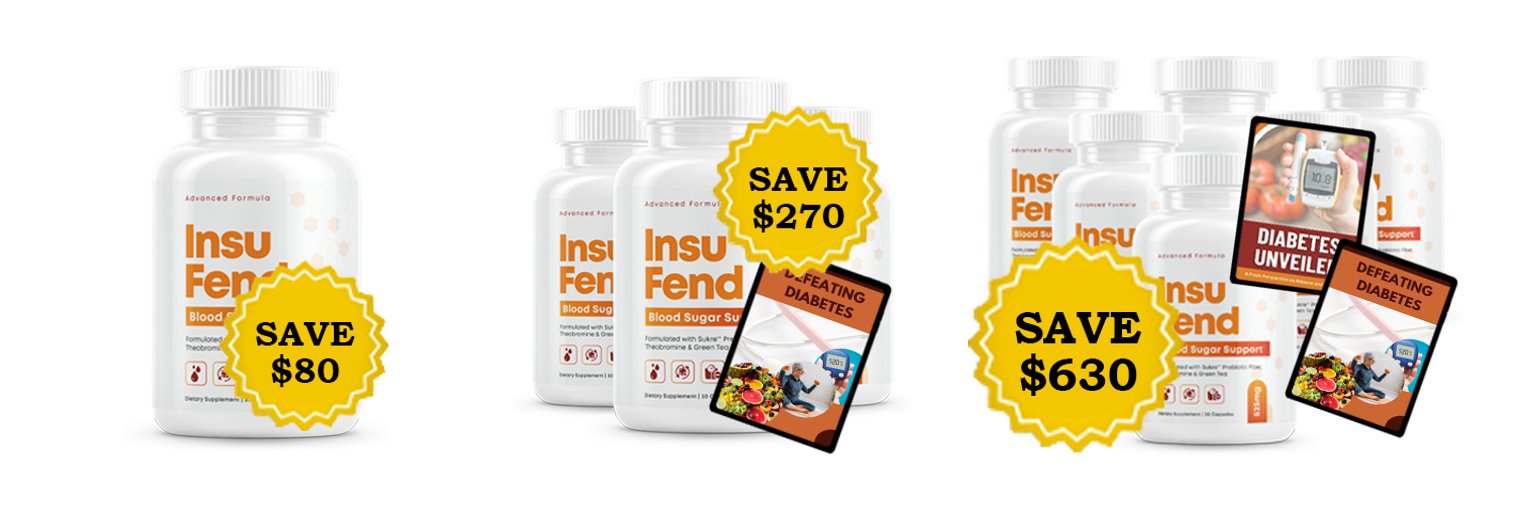
| Package | Supply | Price | Shipping | Per bottle |
|---|---|---|---|---|
| Basic — 1 bottle | 30 days | $69 | +$9.99 | $69 |
| Best value — 3 bottles | 90 days | $177 | Free | $59 |
| Biggest discount — 6 bottles | 180 days | $294 | Free | $49 |
Two terms that are better than average:
- 60-day money-back guarantee, described as no-questions-asked. That’s longer than the 30 days many competitors offer.
- Stated one-time purchase. The page says “one-time fee” and “no auto-ship”, and the larger packages include free US shipping. Auto-ship is the single most common complaint in this category, so a stated one-off is worth something.
The larger packages also include two digital bonuses. They’re downloads, not physical products, and the dollar values the page assigns them ($59 each) are marketing figures rather than prices anyone pays.
InsuFend against the category’s common baseline
The baseline below describes practices that are common across direct-to-consumer supplement sales pages in this category — not any specific competitor. It is a terms-and-transparency comparison, not an effectiveness ranking.
| Dimension | Category common practice | InsuFend as reviewed |
|---|---|---|
| Ingredient disclosure | Names only, or partial amounts | Eight ingredients named, zero amounts |
| Dose matching to studies | Rarely possible | Not possible |
| Refund window | 30 days is typical | 60 days, stated |
| Auto-ship / recurring billing | Frequent complaint pattern | Stated one-off, no auto-ship |
| Anchor pricing (struck-through totals) | Common | Present ($149/$447/$894 shown struck) |
| Bottle size | 30 days typical | 30 days |
Read as a whole: the purchase-terms half of the offer is above the category baseline, and the transparency half is below it. That split is the honest summary of this product.
Opens the manufacturer's own order page. Confirm the price, shipping and refund window there before ordering — they change.
Sold via BuyGoodssecure checkout60-day money-back guaranteeaffiliate link · we may be paid · the price you pay is unchangedOur scoring
Mixed
Recognisable ingredients, reasonable refund terms, and a transparency problem that undercuts the rest. Not a scam — but not checkable either.
| Ingredient transparencyEight ingredients named, zero amounts published | 1.5 |
|---|---|
| Evidence alignmentIngredient trials are modest and can't be matched to this dose | 2.0 |
| Value for money$49 per bottle on the best tier — mid-category | 3.0 |
| Purchase terms60-day refund, one-time purchase — better than most | 4.0 |
| Claim accuracyDisease-level claims outrun the label and the evidence | 1.5 |
What works
- No auto-ship and no recurring billing stated — rarer in this category than it should be.
- 60-day money-back window, which is longer than the 30 days many competitors give.
- The eight ingredients are ordinary and recognisable, not obscure fillers.
- Free US shipping on the 3- and 6-bottle packages.
What doesn't
- No quantities published for any of the eight ingredients — no mg, no mcg, no IU.
- The page makes disease-level claims (a 'root cause' of type 2 diabetes, repairing the beta-cell sensor) that no label or study here supports.
- Testimonials quote changes in fasting glucose and A1C, which are unverifiable and, for a supplement, misleading in tone.
- Crossed-out anchor prices on the order page that can't be verified.
- A countdown timer and a 'quantity remaining' figure that create artificial urgency.
- The single-bottle equivalent is the most expensive per bottle, pushing you toward a large upfront order.
Who it suits, and who should skip it
It’s a reasonable bet only if you understand what you’re buying: a once-daily blend of ordinary botanicals and nutrients, sold with a genuine 60-day refund, from a category where almost nobody publishes doses. If the refund window is what gives you the confidence to try it, that’s a fair reason.
Skip it if you want to compare what’s in the capsule against the research before buying, because there is nothing on the label to compare. Skip it too if the page’s disease-level language is what drew you in — that language is the least reliable part of the offer.
And it’s the wrong purchase entirely if you take prescription medication for blood sugar. No supplement in this category is a substitute for medication, monitoring, or your clinician’s advice, and the page’s framing around “without drugs or injections” is exactly the kind of claim to ignore.
The bottom line
InsuFend isn’t a scam. It’s a legitimate product with reasonable purchase terms and an ingredient list that raises more questions than it answers.
The thing to understand before you buy is the asymmetry: the terms are checkable and they’re fine; the formula isn’t checkable at all. Whether that trade is acceptable is your call — but now you’re making it with the same information we had.
How VitalRoundup rates supplements
Every score on this site comes from the same five checks. None of them measure whether a product "works" as a treatment — that is a clinical question we do not answer. They measure how verifiable, fairly priced, and honestly presented the product is.
- Ingredient transparency. Are amounts — in mg, mcg, or CFU — printed on the label, or hidden in a blend?
- Evidence alignment. Does the published human research actually point at this stated use?
- Value for money. What you pay versus what is verifiably in the bottle.
- Purchase terms. Refund window, auto-ship, and subscription clarity.
- Claim accuracy. Do the marketing claims exceed what can be independently checked?
| Score | Meaning |
|---|---|
| 4.5–5.0 | Excellent |
| 3.5–4.4 | Good |
| 2.5–3.4 | Mixed |
| 1.5–2.4 | Weak |
| 0.0–1.4 | Poor |
We are an editorial team, not a clinic. Our reviews are general educational information, not diagnosis or treatment, and they are not a substitute for advice from your own qualified clinician.
References
- Devangan S, Varghese B, Johny E, et al.. The effect of Gymnema sylvestre supplementation on glycemic control in type 2 diabetes patients: A systematic review and meta-analysis. Phytotherapy Research, 2021 (PubMed 34467577). pubmed.ncbi.nlm.nih.gov/34467577/
- Allen RW, Schwartzman E, Baker WL, et al.. Cinnamon use in type 2 diabetes: an updated systematic review and meta-analysis. Annals of Family Medicine, 2013 (PubMed 24019277). pubmed.ncbi.nlm.nih.gov/24019277/
- Moridpour AH, Kavyani Z, Khosravi S, et al.. The effect of cinnamon supplementation on glycemic control in patients with type 2 diabetes mellitus: an updated systematic review and meta-analysis. Phytotherapy Research, 2024 (PubMed 37818728). pubmed.ncbi.nlm.nih.gov/37818728/
- Balk EM, Tatsioni A, Lichtenstein AH, et al.. Effect of chromium supplementation on glucose metabolism and lipids: a systematic review of randomized controlled trials. Diabetes Care, 2007 (PubMed 17519436). pubmed.ncbi.nlm.nih.gov/17519436/
- Saadh MJ, Gataa IS, Hussam AS, et al.. Effect of Epigallocatechin Gallate on Glycemic Index: A Systematic Review and Meta-Analysis of Randomized Controlled Trials. Clinical Therapeutics, 2025 (PubMed 40885603). pubmed.ncbi.nlm.nih.gov/40885603/
- Pittas AG, Dawson-Hughes B, Sheehan P, et al.. Vitamin D supplementation and prevention of type 2 diabetes. New England Journal of Medicine, 2019 (PubMed 31173679). pubmed.ncbi.nlm.nih.gov/31173679/
These references describe the evidence for individual ingredients in defined populations — they do not establish any result for this finished product.
Frequently asked questions
Is InsuFend a scam?
Where can I read real Insu Fend reviews?
Why does the missing amount matter so much?
Does InsuFend have a money-back guarantee?
Does InsuFend auto-ship?
Can InsuFend replace diabetes medication?
Does it publish how much of each ingredient is in a capsule?
Opens the manufacturer's order page. Verify the current price and the refund window there.
Sold via BuyGoodssecure checkout60-day money-back guaranteeaffiliate link · we may be paid · the price you pay is unchangedRelated notes
→ Blood Sugar and Cholesterol Supplements Compared: An Evidence-Led Hub
→ Berberine for Blood Sugar: What the Clinical Evidence Actually Shows
→ Natural Blood Sugar Support Supplements Compared: A Label-First Guide
→ GlucoTonic Review: Six Ingredients, Two Disclosed Amounts
Independent product research
We compare publicly documented ingredient lists, official pricing pages and verified customer reports. We do not accept payment for reviews and we do not publish claims a product's own manufacturer cannot substantiate.
Facts checked: . How we review
Reviewed by VitalRoundup Editorial Team — sources and label data re-checked. Review standards